Curriculum Features:
Lessons online or downloadable
Lessons can either be accessed on this website or downloaded for offline use.
Audio clips for Facilitators
Get your head in the game with an introductory audio coaching message for each lesson.
Embedded Videos
Videos in lessons are embedded in the PowerPoint files.
Table of Contents
The T4C 5.0 Curriculum is divided up into the following sections:
Foreword and Acknowledgments
T4C 5.0 Introduction (i - v)
Preface (i - xvii)Lesson 1: Introduction to T4C 5.0
Social Skills
Lesson 2: Active Listening
Lesson 3: Asking Questions
Lesson 4: Giving Feedback
Lesson 5: Knowing Your Feelings
Cognitive Self Change
Lesson 6: Thinking Controls Our Behavior
Lesson 7: Pay Attention to Our Thinking
Lesson 8: Recognizing Risk
Lesson 9: Use New Thinking
Lesson 10: Thinking Check-In
Social Skills (Part 2)
Lesson 11: Understanding the Feelings of Others
Lesson 12: Responding to the Feelings of Others
Lesson 13: Responding to an Accusation
Lesson 14: Responding to Anger
Lesson 15: Negotiating
Problem Solving
Lesson 16: Introduction to Problem-Solving
Lesson 17: Stop and Think
Lesson 18: State the Problem
Lesson 19: Set a Goal and Gather Information
Lesson 20: Practice Skills Problem-Solving 1-3
Lesson 21: Think of Choices and Outcomes
Lesson 22: Make a Plan
Lesson 23: Do and Evaluate
Lesson 24: Problem Solving Application
Lesson 25: Celebration and Transition
Aftercare: T4C 5.0 Program Check-In
T4C 5.0 Introduction
Thinking for a Change is an integrated cognitive behavioral change program authored by Jack Bush, Ph.D., Barry Glick, Ph.D., and Juliana Taymans, Ph.D., under a cooperative agreement with the National Institute of Corrections (NIC) in 1997. From the inception of the program T4C has undergone several revisions to meet the best available knowledge at the time. T4C and all the previous iterations incorporated research from cognitive restructuring theory, social skills development, and the learning and use of problem-solving skills. Since its release to the corrections field in 1998, the T4C program has continued to innovate and respond to the needs of the field. Thinking for a Change is constantly looking to modify and modernize itself. It has been updated a few times in response to feedback from the field. In FY2017, the update resulted in the T4C 4.0 online curriculum. In 2021, NIC updated the curriculum videos for T4C and created English and Spanish versions under a cooperative agreement with Storyline Films.
In 2023, the NIC sought to revise the T4C curriculum through a cooperative agreement that would:
- Revise and update the English T4C 4.0 curriculum to an English T4C 5.0 curriculum.
- From the newly revised English T4C 5.0 curriculum, create/develop a Spanish T4C 5.0 curriculum. The curriculum packages (English and Spanish) will provide trained Thinking for a Change facilitators the opportunity to acquire knowledge, skills, and guidance that are vital to delivering the Thinking for a Change program to men and women under correctional authority.
- Develop a Thinking for a Change Virtual (T4C-V) English 5.0 program using best practices for virtual delivery and facilitation and new technology to provide correctional agencies with innovative ways to deliver T4C-V and provide men and women under correctional authority newer, efficient methods of participating in T4C.
- Using the newly designed T4C-V English 5.0 program, create/develop a Thinking for a Change Virtual (T4C-V) Spanish program.
Evidence Based Strategists, Inc was awarded the agreement and took to task immediately on the goals set in the agreement. EBS worked directly with six subject matter experts chosen from across the country, a design team, and research and technology experts to meet and expand the goals set forth in our agreement. Thinking for a Change 5.0 has incorporated current evidence and technology to enhance the effectiveness of the T4C program while increasing the overall dosage of the program from 50+ hours to now up to 100 hours of dosage of T4C 5.0. The result of these effort is represented in the curriculum and materials of T4C 5.0.
The revisions made by EBS has revised the curriculum to make it more modern in the following ways:
- The language more comprehensive and accessible. The program uses language that helps eliminates potentially triggering or harmful phrases and statements which were in the previous versions of T4C.
- Updated the lesson plan format. The new lesson layout removed the two columns that were reported to be confusing by many facilitators. This was replaced by a more seamless easy to read layout that integrates facilitator tips and notes that enhance lesson delivery.
- Added model examples for all demonstrated skills. Many facilitators and those who observe lessons will attest to the difficulty in maintaining consistency in modeling skills. T4C 5.0 has added specific model scripts that when used, provides clear consistent modeling of any skill modeled.
- Added audio companions for every lesson to increase facilitator understanding of each lesson. T4C 5.0 has links and QR codes at the beginning of every lesson that provides facilitators a short but meaningful explanation of the lesson purpose as well as helpful hints on how to deliver each lesson.
- Updated Social Skills. We have updated steps of some skills and added different skills that address specific skill deficiencies of medium and high-risk individuals. Based on the feedback from many facilitators and current evidence, T4C 5.0 replaced some skills with Social Skills that align with addressing skill deficiencies that are common in medium and high-risk individuals. We also changed the steps of some skills to make them more effective and accessible for group members.
- Updated videos. T4C 5.0 has all new videos and scenarios both in English and Spanish that are more modern and relatable. T4C 5.0 incorporates the new program videos, and all associated lessons are updated to reflect the new content. The new videos remove the need for permissions required in previous versions of the T4C program and have been reported to be more relevant and up-to-date.
- Created a pre-test and post-test specifically for T4C 5.0. Another major request from corrections professionals has been for a “T4C” program evaluation tool. T4C 5.0 now has a pre/post-test that assesses group member’s acquisition of the skills, concepts, and to evaluate the effectiveness of T4C 5.0. We have adopted a pragmatic evaluation design that focuses on assessing the adoption of improved Social Skills, Emotional Self-Regulation and Problem Solving. The focus is early outcomes rather than longer-term outcomes because we do not have an extended follow-up period to assess long-term criminal behaviors.
- Added online support modules to increase treatment dosage. These modules can be used with the in-person version as well. EBS recognized the potential of technology in enhancing the T4C program. T4C 5.0 has included asynchronous online dosage modules that can be added to both in person and online program delivery that can add an addition hour of cognitive-behavioral intervention to each lesson. The content of these modules reinforces the learning of the previous lesson with knowledge tests and expanded explanations of newly learned skills. The intent of use of the online dosage modules is that practice work would be assigned and reviewed in between virtual T4C 5.0 sessions online. This can expand the program to nearly 100 hours of dosage while adding additional in session time for introducing and practicing new skills (Use requires a LMS or a web portal for group member access to dosage module materials).
- Aftercare program added and simplified. T4C 5.0 has designed an all-new program aftercare lesson that is iterative and easily delivered. This aftercare program is a T4C 5.0 check-in that allows those who complete the full program to practice skill application with real world problems they face. Participants will introduce a current situation or problem they face and then work with facilitators and peers to identify which element of T4C 5.0 would work best to address the situation in a way that reduces risk or helps them get what they want. Once the skill is identified, the group members refine applying that selected skill through tryouts and feedback in session.
- Created a fidelity tool specifically for T4C 5.0. Yet another request over the years has been for a program specific fidelity tool. T4C 5.0 has a tool designed for general facilitation assessment areas as well as T4C 5.0 component specific assessment items. This tool is a true fidelity tool that uses a frequency Likert scale to measure the degree to which identified elements are present during observation. The tool will not provide competency markers such as “how well” an element was performed or “effectiveness” of an element. The tool shows the degree to which elements were present which provides a meaningful basis for providing feedback to facilitators. This tool is designed to allow agencies to get an initial snapshot of program delivery and works best when feedback is given from a person knowledgeable in T4C.
- Translated all components into Spanish. Every program item has been translated into Spanish. All materials (lesson plans, handouts, slides) were translated through our collaboration with The Spanish Group. Please note that the Spanish translation is based on Latin American Spanish. We recognized the variety and complexity of Spanish translation given all the versions of Spanish available. We were advised that South American Spanish will provide a more accessible vehicle for further translation. That said, facilitators are encouraged to make the necessary modifications to phrases and words that fit your Spanish speaking population.
Preface
History and Background
Thinking for a Change (also known as T4C) was first designed and introduced in the late 1990’s as a promising cognitive behavioral intervention for individuals involved with the criminal and juvenile justice systems. Cognitive behavioral programs have evolved, impacted by a variety of theoreticians and practitioners. Much of the seminal work in cognitive interventions focused on cognitive restructuring aimed at addressing individuals’ thoughts, feelings, attitudes, and beliefs. This work is reflected by the contributions of Aaron Beck, Albert Ellis, Stanton Samenow, Samuel Yochelson, Robert Ross, Elizabeth Fabiano, and Jack Bush. Parallel to the development of the cognitive restructuring interventions, several social scientists were also exploring cognitive skills training as a form of psycho-social-educational intervention. Individuals such as Albert Bandura, Donald Meichenbaum, George Spivak, Myrna Shure, Arnold Goldstein, Barry Glick, and Juliana Taymans developed strategies and curricula to teach skills that support pro-social interactions. The work of these individuals set the foundation and benchmarks for many of the programs and cognitive behavioral curricula currently developed and implemented, including those used throughout the criminal and juvenile justice systems.
From the first edition of Thinking for a Change (1997) to Thinking for a Change 4.0 (2016) NIC and original T4C authors set a standard for effective cognitive behavioral interventions. Those original authors took on the ambitious task of synthesizing the concepts and tools from both cognitive restructuring and cognitive skills paradigms into an integrated intervention. The program has been taught to more than 10,000 facilitators and over 1,000 trainers of facilitators. The history and legacy of the T4C program is rich with inspiring efforts and success stories of graduates and corrections professionals working towards risk reduction and behavioral change.
These efforts and innovation over the years have contributed to the revisions of the program. Thinking for a Change 5.0 is the culmination of the knowledge of the original authors, the efforts, and insights of corrections professionals, and in the innovations of the project team of Evidence Based Strategists, Inc.
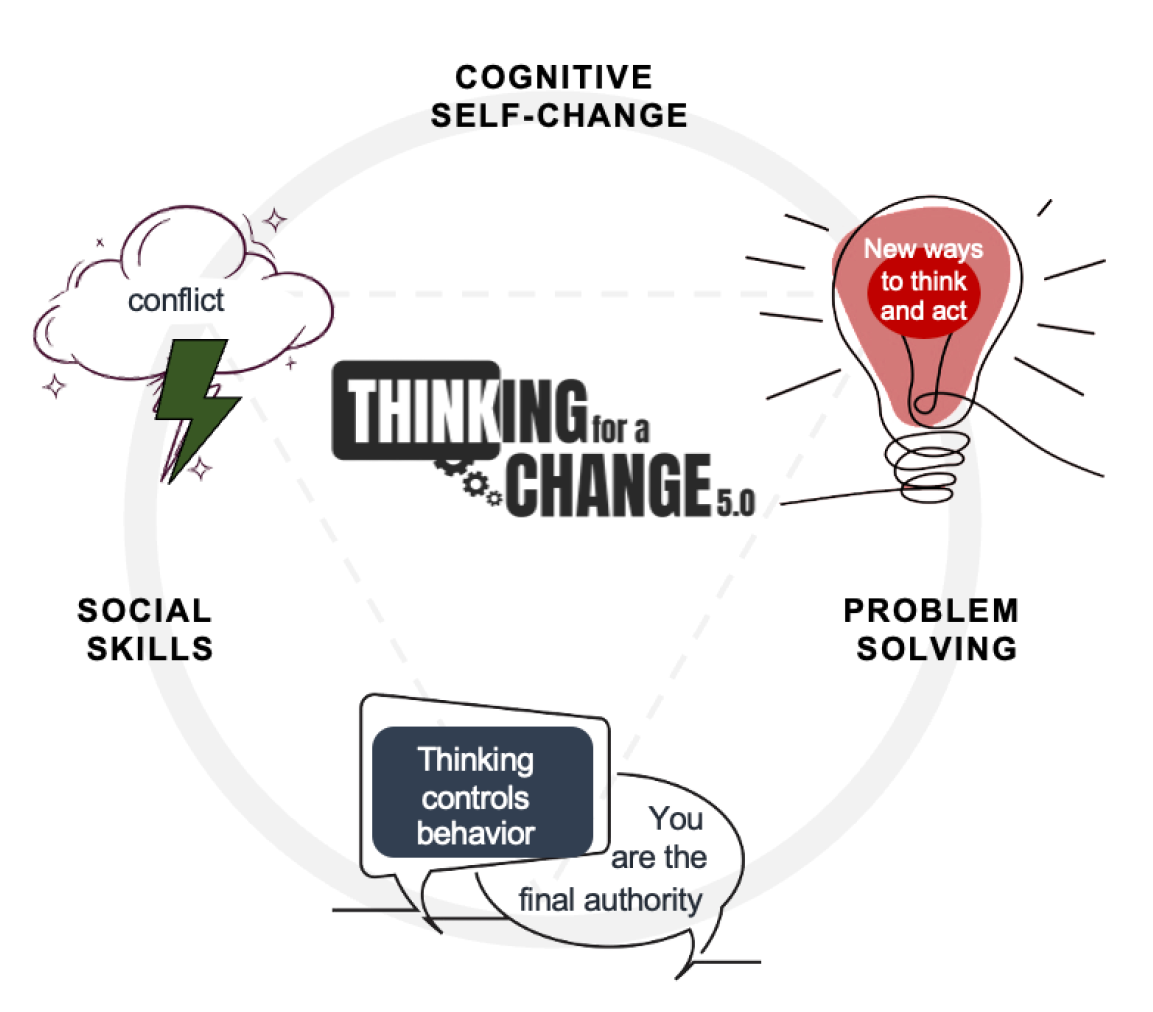
Thinking for a Change 5.0 is a new and improved design for the theoretical and philosophical foundation of the program to flourish in the newer technologies of the 21st century. The new authors have further synthesized the three fundamental components of T4C to make the intervention more seamless such that each component shares each other's processes and conceptual content. The three components of Thinking for a Change are: Cognitive Self-Change, Social Skills, and Problem-Solving skills. Cognitive Self-Change teaches individuals a concrete process for self-reflection aimed at uncovering thinking patterns that support risky behavior. Social Skills instruction prepares group members to engage in pro-social interactions based on self-understanding and consideration of the impact of their actions on others. Problem-Solving skills integrate the two previous interventions to provide group members with an explicit step-by-step process for addressing challenging and stressful real-life situations that address conflicts in their everyday lives.
The Curriculum Format
The integration of the 25 lesson T4C 5.0 program is as follow:
- Lesson 1 presents the program and structure for learning to group members.
- Lessons 2-5 provides useful life skills, teaching basic Social Skills that are fundamental to group participation, while lesson 5 has application throughout Cognitive Self-Change and Problem-Solving.
- Lessons 6-10 equips group members with skills in self-regulation and empowerment that are essential components of Social Skill application and Problem-Solving.
- Lesson 11-15 utilizes the self-regulation acquired in Cognitive Self-Change to effectively practice the advanced Social Skills in these lessons.
- Lesson 16-24 incorporates the structured process of Social Skills and the self-regulation of Cognitive Self-Change to create an effective process for responding to conflicts.
- Lesson 25 is a celebration of the program completion and a possible transition point for implementing the T4C 5.0 Check-In (aftercare).
Lesson Format
Thinking for a Change 5.0 is formatted with the expectation that each session will adhere to the flow of activities presented in detailed lesson plans. The concepts are color coded to indicate which concept is being delivered in that lesson. Social Skills are “red”, Cognitive Self-Change lessons are “blue”, and Problem-Solving lessons are “green”. Each lesson is divided into several sections: Lesson Overview, Lesson Script, Supplemental Materials (Model Scripts, Handouts, Charts). The PowerPoint slides for each lesson are available both individually per lesson and all lessons packaged together for the T4C 5.0 program.
Lesson Overview
The lesson overview section contains summary information about the lesson, as well as important notes to help facilitators prepare for a group. This section begins with a lesson summary and rationale, followed by important concepts and definitions, and then the objectives for that lesson. This section also provides an outline of the major activities of the lesson. All supplements that are used during the lesson (handouts, chart, etc.) are listed, including links to downloadable versions. The overview section also contains notes on any special preparation considerations such as using materials across lessons and introduces “facilitator tips” as an added boost to your facilitation needs to delivery T4C 5.0.
One of the newest innovative advancements of T4C 5.0 are the audio companions which are featured in the lesson overview. These audio companions are essentially your own personal T4C coach or expert helping prep and guide you in your preparation with your co-facilitator before you facilitate each T4C 5.0 lesson. The audio companions are made available able via a web link and a QR scan code for easy access.
AUDIO COMPANION
Scan the QR code below to hear a short audio introduction to this lesson.

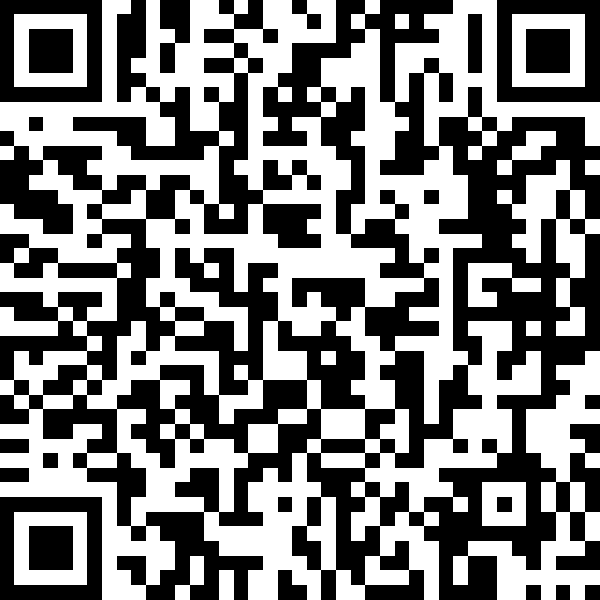
https://t4c.nicic.gov/t4c50/audio/lesson-01
Downloadable presentation slides and PDFs of all necessary charts, handouts, and model scripts are found in both the lesson overview preparation section and the “What to do” column prompts facilitators of their use precisely where they should be used during delivery of the lesson. The required videos are now embedded within the presentation slides. Graphic examples of charts are contained within the lesson script section.
More detailed information related to the Thinking for a Change 5.0 curriculum guide can be discovered in the “How to Use the Facilitator Guide” Introduction manual.
Lesson Scripts
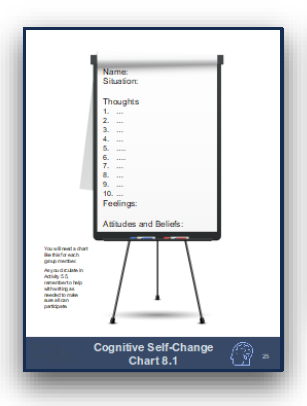
Each lesson is formatted the same way for simplicity in delivery. The lesson script section comprises the script and directions for what exactly needs to happen during the lesson for successful delivery. This section is divided into two columns with very distinct, yet equally important, functions. T4C 5.0 has moved the notes and prompts to the left side under the “What to do” column and the lesson scripts are now on the right of each page and highlighted by the “What to say” column. This will allow facilitators to read the facilitator guide in a “left-to-right” progression. The left-hand column of this section, “What to do”, contains important notes and directions for the delivery of each lesson. You will see this information is in a light shaded box. Facilitators should pay special attention to this column when preparing for and delivering a lesson. Co-facilitators should be aware of the notes in this left column while their co-facilitators are presenting the information from the right “What to say” column. These notes include instructions for group participation, processes for content delivery, and prompts for elements of the lesson. This column also contains thumbnail graphics of all slides, which should be brought up for viewing for the group precisely where they are located in the script. In addition, it also indicates when handouts should be distributed, when videos should be shown, or when scripts should be read. Finally, the “what to do” column contains graphic representations of all charts required for a lesson, and when they should be used.
The right-hand column, also known as “What to say”, is designed to be read aloud. Newer facilitators are encouraged to “stick to the script” to ensure the intention and objective of each activity is achieved. While more experienced facilitators will feel more comfortable with the material, the content and flow of each lesson must be completed with fidelity. Thinking for a Change 5.0 curriculum was developed as a script and not as a guide. Fidelity to the curriculum is critical to successful outcomes. All facilitators must “stick to the script” to ensure best chances towards successful outcomes of the T4C 5.0 program. Also new to T4C 5.0 are “Facilitator Tips”. These tips are advice and suggestions gathered through the experiences from several highly experienced T4C facilitators and T4C Trainers from across the country. These “Facilitator Tips” are often added within the “What to say” column that offer suggestions for delivery of the lesson script.
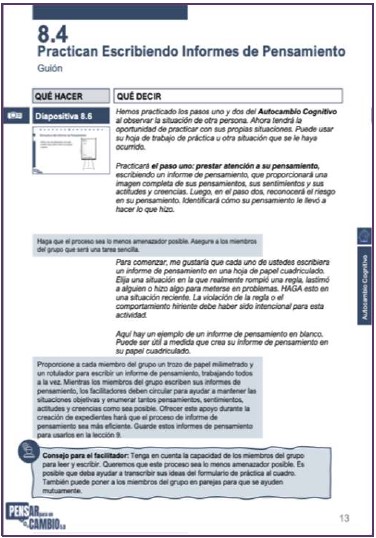
Group Facilitators are not permitted to conduct T4C 5.0 group sessions without using the lesson plans as roadmaps for implementation.
Supplemental Materials
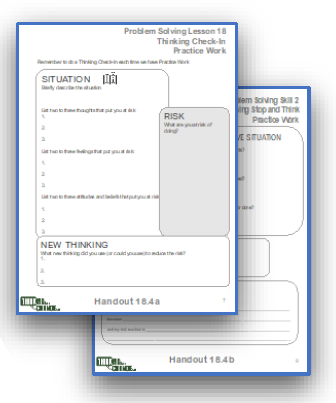
Each lesson has additional synchronous materials to support the in-session learning as well as the practice work in between sessions. These materials are located at the back of each lesson and are clearly labeled. Any lesson that requires a model to be acted out by facilitators has a set of model options to choose from that need to be used to accurately demonstrate the skill of the lesson. In addition, there are handouts given in several lessons that are contained within the supplements. The “What to do” notes give prompts, guidance and shows a thumbnail for when it is the appropriate time to distribute the handouts within the lesson. Many of the lessons have charts that must be prepared prior to session. The supplements will provide examples of the charts for any lesson requiring their use. The Thinking for a Change 5.0 Virtual Program has a special feature that allows each session to be extended beyond the classroom in a meaningful way. Thinking for a Change has always emphasized the importance of transfer opportunities in skill development. In Thinking for a Change 5.0 Virtual it even goes several steps beyond the transfer through our process for “practice work (homework) review. (examples below)
The in-person delivery of the program offers an option of traditionally reviewing practice work during the session or through the online dosage modules. However, T4C 5.0 Virtual is designed for exclusive use of the online dosage modules and its implementation throughout the virtual program. Group members will log onto the agency’s site or LMS to access the additional lesson content, as well as their practice work sheet. The NIC has provided an access site with the modules for any agency that does not have the resources for their own site. The online dosage modules are self-directed learning opportunities that must be completed in between each live virtual classroom session. The sessions include similar and additional content that reinforces the skill from the lesson.
The purpose of Thinking for a Change 5.0 is to empower people to change with the mantra, “Change their thinking, change their behavior, and change their lives”. As such, the curriculum itself must also be responsive to change. Thinking for a Change 5.0 represents a significant evolution of the curriculum to include innovations in design, delivery, and advances in technology.
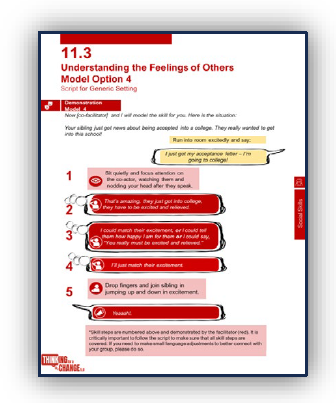
Model Scripts
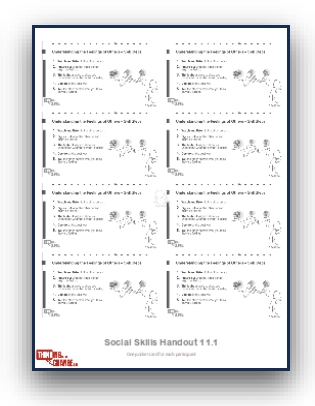
Skill Cards
Charts
Practice Work
Curriculum Revision
Spanish Translation
All materials (lesson plans, handouts, slides) were translated through collaboration with The Spanish Group into Spanish. Please note the Spanish translation is based on South American Spanish dialect. We recognized the variety and complexity of Spanish translation given all the versions of Spanish available. We were advised that South American Spanish will provide a more accessible vehicle for further translation. That said, facilitators are encouraged to make the necessary modifications to phrases and words that fit your Spanish speaking population.
Videos
NIC has produced new and modern videos specific for Thinking for a Change 5.0 in collaboration with Storyline Films. Making the viewing of T4C video scenarios a more complete viewing experience. Facilitators will no longer need to purchase core videos essential for delivery of T4C 5.0 lessons as all the videos, including a brand-new scenario video for Lesson 16. These videos were crafted to invoke the appropriate emotions needed for fruitful discussion and discourse in each lesson.
Validated Pre-Test and Post-Test
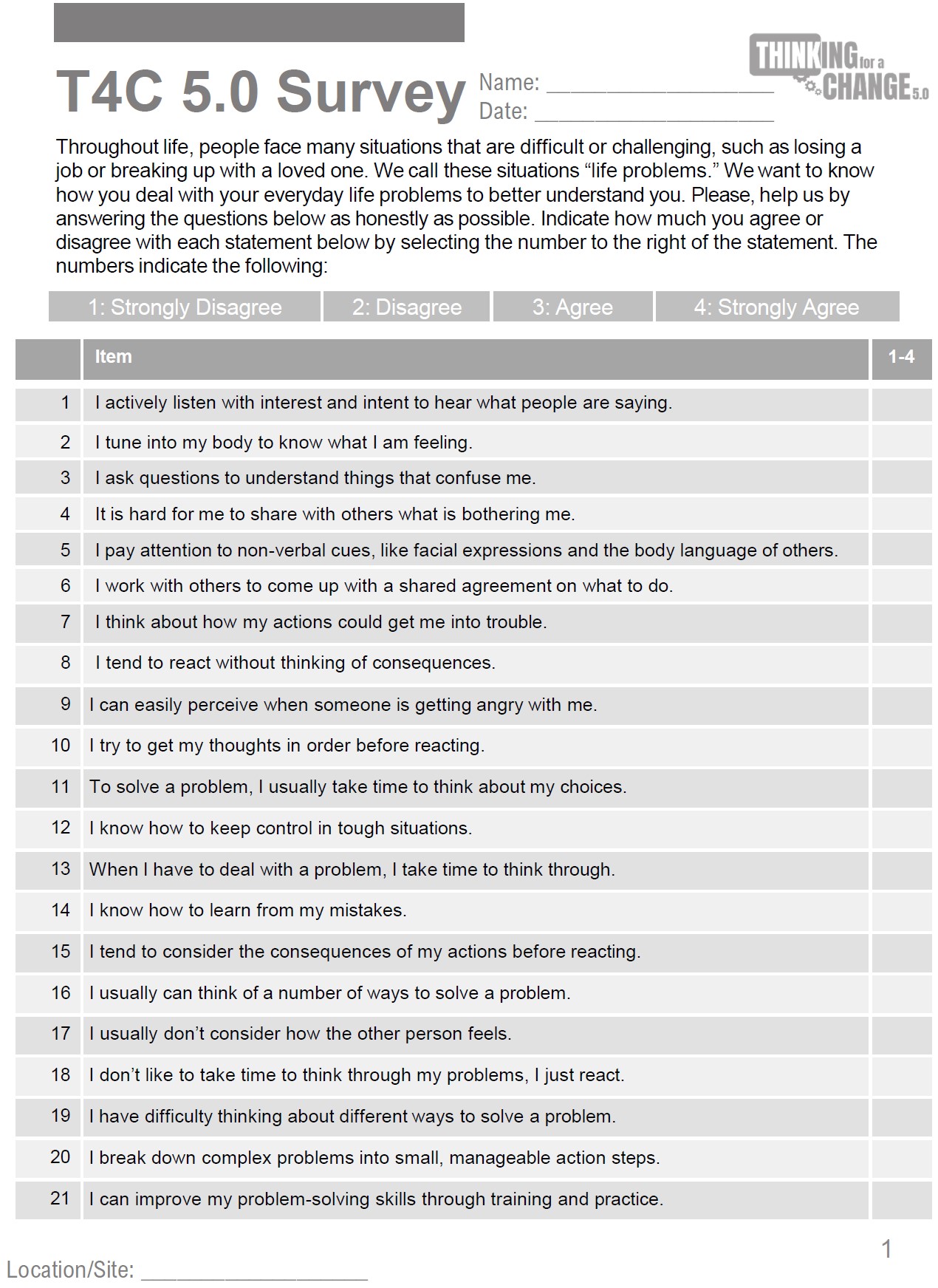
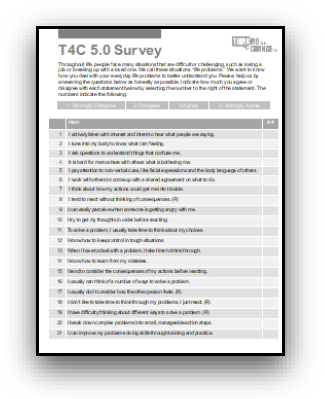
T4C 5.0 provides a pre-test required to be a part of the orientation for participants to the program and to assess their base knowledge of the concepts and application of skills prior to beginning the program. A follow-up post-test will be completed during the final session to assess participant knowledge and application of program elements after completion.
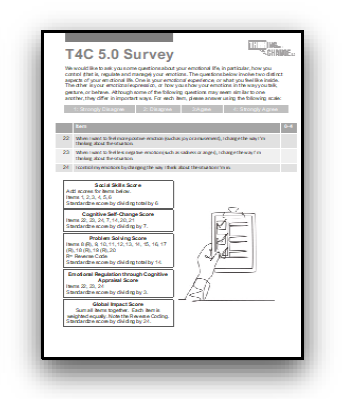
The T4C 5.0 program evaluation tool is available as part of the program. The T4C 5.0 authors have adopted a pragmatic evaluation design that focuses on assessing the adoption of improved Social Skills, Emotional Self-Regulation and Problem Solving. The tool focuses on early outcomes (skill knowledge) rather than longer-term outcomes (program impact). During the pilots of T4C 5.0, the program evaluation tool revealed improvements in all categories of the evaluation protocol which indicates promise for the effectiveness of the program design and delivery. Table 1 shows the results of our Minnesota Department of Corrections pilot.
Program Specific Fidelity Tool
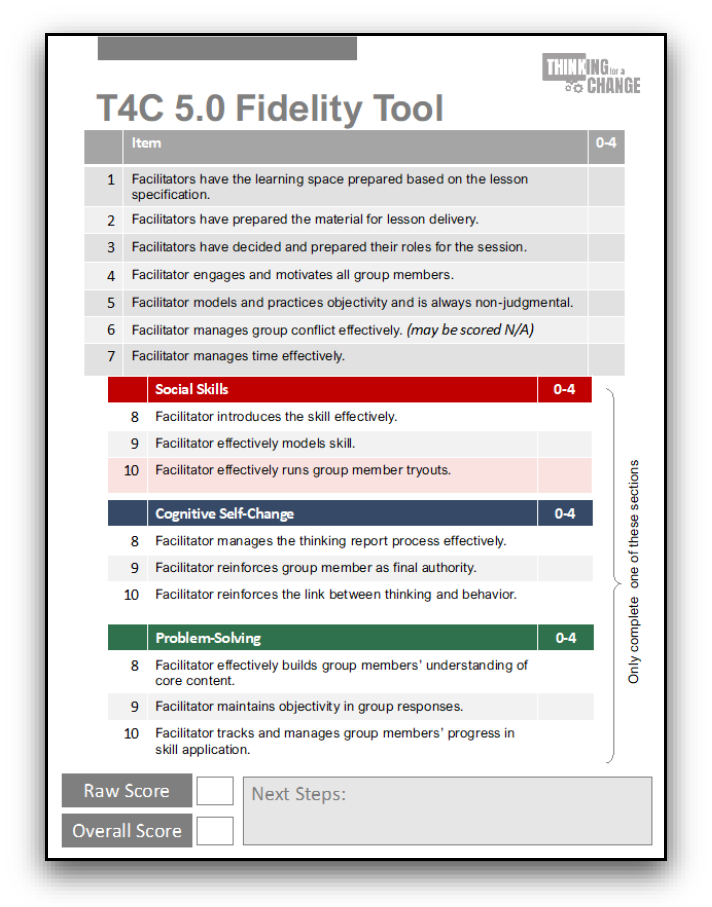
The T4C 5.0 Fidelity Tool is an assessment instrument designed to measure that the program the program is delivered as designed. This tool helps assess how closely the facilitator followed the instructions in the facilitator guide during the observed session and captures elements of effective facilitation behaviors. The results of your observation should be a catalyst for strength-based coaching and development of the program facilitators. The T4C 5.0 fidelity tool is available as part of both the virtual and in-person program.
The Fidelity Tool uses a “frequency” Likert scale ranging from “not at all” to ”a great extent” to assess the degree to which the selected items are present during the observation of a T4C 5.0 lesson. The measures are quantitative and are designed to be combined with a qualitative feedback session to help facilitators maintain and develop their skills in delivering the program.
Methods
Four subscales of interest were identified targets for the intervention: social skills (n=6 items), interpersonal problem solving (n=8 items), emotional regulation through cognitive appraisals (n=3), and cognitive self-change (n=7). For each scale, a sub-score was calculated. Across all scales, a global score was calculated. Each score was re-scale to a value between 0-100 for ease of interpretation, and increasing values indicated improved self-reported skills.
For each subscale and the global score, we examined the mean and distribution and compared these post and pre-training by estimating a t-test. Below we show each construct and global score. And, then calculated a t-test to compare means pre- and post-training (Table 1).
| Table 1. Thinking for Change Scores for Selected Constructs. Minnesota Sample* | Mean | Mean Difference* (95% CL) | p-value* | |
|---|---|---|---|---|
| Pre- Training | Post- Training | |||
| Social Skills | 77.0 | 79.4 | 2.4 (-1.3, 6.2) | 0.2027 |
| Interpersonal Problems Solving Management | 71.7 | 79.4 | 7.7 (2.8, 12.5) | 0.0025 |
| Emotional Regulation via Cognitive Appraisal | 69.9 | 84.5 | 14.6 (7.4, 21.8) | 0.0001 |
| Cognitive Self-Change Skills | 73.7 | 84.8 | 11.1 (6.20, 16.0) | < 0.0001 |
| Global, Overall | 73.8 | 81.0 | 7.1 (3.4, 10.8) | 0.0003 |
*Lino Lakes, Moose, Stillwater, Faribault. Excludes Rush City because no post-data provided.
These results combined with the assessments from the T4C 5.0 Fidelity Tool can provide valuable data points for further evaluation of the program long term.
Implementing and Administering Thinking for a Change
Established and emerging research around effective and successful implementation of any evidence-based practice illustrates the need for a philosophical shift for leaders and staff, mastery of new, complex skills, and a progressive and sustained effort on the part of agencies to continually monitor and evaluate program fidelity. In other words, it takes a lot of work to get the job done right! Mounting documentation indicates that evidence-based innovations alone do not create the desired impact; rather they must be supported by evidence-based implementation. Without effective implementation, evidence-based innovations will produce poor results and may even cause harm.
If you are just embarking on implementing Thinking for a Change or if your agency has been delivering the program for some time, now is a great time to plan for or review your current delivery structure to make sure it is effective. Consider the following:
Who is leading your implementation efforts? Successful implementation requires active involvement and support from the top down in your agency. A leader’s involvement demonstrates commitment and the importance of the program to the organization’s mission. Ideally, an effective implementation of the program would include an informed agency decision maker who can respond to program implementation needs with the necessary resources for effective delivery and a program coordinator who manages program elements such as recruitment of group facilitators, selection of group members, define and monitor the referral process, and other important logistics of running the program.
How will you know Thinking for a Change is effective? Agencies must have clearly defined goals and measurable outcomes for the program. Think broadly when determining what you want to measure to include the implementation process, staff performance and short, intermediate, and long-term outcomes for the men and women under correctional authority who participate in the program. Monitor progress towards those goals and use the data collected to make program adjustments and improvements when necessary. The T4C 5.0 Program Evaluation Protocol and the T4C 5.0 Fidelity Tool are mandatory elements of implementation. At the same time, they are intended to be used in conjunction with other measurements to provide a full picture of the program’s effectiveness.
How are you selecting your facilitators? Getting the right person for the job is critical. Education level and years of experience may be valuable elements of selection, yet they should not be used as barriers to select facilitators. Temperament and willingness are as important, if not, more important in the successful delivery of this program. This fact was demonstrated during the pilots of T4C 5.0, where some of the facilitators of the groups were actual incarcerated individuals who successfully completed a 32-hour T4C facilitator training, and they co-facilitated the T4C 5.0 program to their incarcerated peers alongside another T4C trained corrections professionals. A major element in the success of any program is the ability of the facilitators to guide the learning activities in a structured, safe, and nonjudgmental environment. With proper training, and selection and consideration factors, effective facilitator traits can be found in corrections professionals and in individuals who be maybe currently under correctional control or people with previous criminal justice involvement.
Consider developing a clear selection process which includes an interview of potential facilitator candidates. Ideal skills for group facilitators include: empathy, patience, objectivity, facilitation/teaching techniques, understanding group processes, a positive attitude, flexibility, and the ability to manage groups through non-coercive means. Most importantly, selected staff should never be forced to become a Thinking for a Change facilitator.
Who will provide ongoing supervision, coaching, and support for the overall program and individual facilitators? Any staff delivering the program must be properly trained to deliver the curriculum. This is a critical first step, but it is not enough. To ensure fidelity and quality assurance, it is important for staff to receive ongoing supervision through expert coaching and feedback. Be sure to use the validated T4C 5.0 Fidelity Tool for live group observation tool, or video record sessions of your in-person or virtual T4C 5.0 groups and use video reviews with the observation tool as part of your on-going quality assurance program. All observations should be followed up with a strength-based coaching session that provides the facilitators with meaningful feedback and support.
Successful implementation and long-term sustainability of this or any evidence-based program requires a continued commitment on the part of agency leadership, facilitators, and the entire organization to work collectively to ensure program fidelity. This is best accomplished through continuous performance monitoring, coaching, training, and outcome measurement to maintain high level program delivery. The time and effort put into implementation and ongoing administration of Thinking for a Change 5.0 will prove to be worth it as agencies begin to realize the benefits of effective correctional practices resulting in improved agency outcomes, improved lives, and healthier communities.
Closed-Ended Groups
T4C 5.0 is a closed-ended group. The design of the program as closed ended is with the intent to offer a structured and consistent environment that can enhance group member engagement, group cohesion, and overall effectiveness of the program. Research on closed-ended cognitive-behavioral intervention (CBI) groups—where membership remains constant throughout the program—indicates several benefits and considerations:
- Structure and Cohesion: Closed-ended groups maintain consistent membership, fostering a stable environment that enhances group cohesion and trust among participants. This stability is crucial for interventions targeting sensitive issues, such as objectivity in expressing internal thinking patterns and participation in tryouts.
- Program Duration and Commitment: These groups typically have a predetermined number of sessions, encouraging participants to commit to the entire course of therapy. This structure can lead to better attendance and engagement, as group members are aware of the program's timeframe and expectations from the outset.
- Group Dynamics and Effective Alliance: A consistent group membership allows for the development of deeper interpersonal relationships and a stronger effective alliance between the facilitators and group members. Participants may feel more comfortable objectively sharing content and engaging in tryouts, knowing that the group composition remains unchanged.
- Facilitator Considerations: Facilitators can plan sessions more effectively, as they are familiar with the group members’ backgrounds, capacities, and progress. This familiarity enables tailored interventions and more precise monitoring of individual and group development.
In summary, closed-ended CBI groups offer a structured and consistent environment that can enhance participant engagement, group cohesion, and overall effectiveness of the intervention.
Due to the scaffolding nature of the lessons, we highly discourage adding group members past Lesson 4 Giving Feedback. From the point of Lesson 5 Knowing Your Feelings, group members we need each previous lesson to learn and practice the new skill in the current session.
Training Requirements
While no special level of education or professional credential is required to deliver the program, NIC does require facilitators to provide verification of a minimum of 32 hours of formal facilitator training before gaining access to Thinking for a Change 5.0.
Free access to the online curriculum through NIC is limited to trained facilitators who are currently employed with a corrections agency (federal, state, local) or a trained facilitator from a private, for-profit, or non-profit agency who is currently contracted to provide T4C for a governmental agency. For those who are not eligible to gain free access to T4C 5.0 through NIC will need to contact the T4C 5.0 authors to inquiry about licensing fees for the T4C 5.0 curriculum. Trained T4C facilitators can request to obtain access to the Thinking for a Change 5.0 curriculum or contact the authors by completing the appropriate application for Thinking for a Change 5.0 access on the T4C home page:
https://t4c.nicic.gov/
Group Facilitator Selection
Being an Effective Thinking for a Change Facilitator
The ideal skills for group facilitators include: empathy, facilitation/teaching techniques, understanding group processes and interpersonal interactions, and the ability to control a group of justice involved adults, at-risk and adjudicated youth, or challenging individuals through non-coercive means. Almost without exception, studies of cognitive behavioral programs point to proper training as a key factor in achieving desired program outcomes.
Training is the Starting Point for Successful Facilitators
Research findings are unequivocal about another point: Fidelity to the program is critical for success. This means that facilitators should adhere to the Thinking for a Change 5.0 curriculum precisely as it is written, deliver it as it is designed, and facilitate groups according to training. Stick to the script!
Thinking for a Change is designed to be delivered by two trained facilitators. We mentioned our strong recommendation for avoiding co-ed T4C groups below in the “Group Member Selection” area. The issues we sited for this recommendation does not extend to the sex of the facilitators who lead the groups. To the contrary, there can be some significant benefits in having men and women co-facilitators. One specific benefit is breaking gender stereotypes. This can challenge traditional roles and biases by allowing participants to see the capabilities and strengths of all genders in various roles. If a trained co-facilitator cannot be present a session, another staff member should be recruited to assist. Roles for a non-trained group assistant include audio/visual operation, charting, group management, and co-acting during modeling displays. Non-trained group assistants can also be invaluable during preparation and prepare and rehearse prior to the session just like the requirement for trained facilitators to prepare and rehearse prior to sessions.
Preparation is an essential component of each lesson. Prior to groups, the lesson should be read through completely. Handouts and skill cards need to be copied, charts need to be prepared, and models must be rehearsed. Facilitators must build time for preparation into their schedules, and their supervisors need to understand and support the need for such. Facilitators should plan for a minimum of 60 minutes of preparation time prior to any lesson delivery.
Group Member Selection
T4C 5.0 is most effective for justice-involved groups with specific characteristics or needs. Targeting the right populations ensures the interventions address underlying issues (criminogenic need) contributing to criminal behavior. Group members should be selected based on areas of the group member’s actuarial assessment. There are several evidence-based risk/need assessment tools for both adult and juvenile justice-involved individuals such as the ORAS, OYAS, LS-CMI, YLS-CMI, PIC-R, etc. These assessment as well as many others share domain categories of both static and dynamic risk factors. A T4C 5.0 group member would ideally show high criminogenic need in the life areas that identify thinking patterns and skill deficits.
| Life Area | Assessment Domains |
|---|---|
| Thinking Patterns | Antisocial Cognition (Antisocial thoughts & beliefs) Criminal Attitudes & Behavioral Patterns Attitudes/Orientation |
| Skill Deficits | Antisocial Personality/Temperament (Poor coping, problem solving, and decision-making skills; impulsivity; difficulty regulating emotions) Criminal Attitudes & Behavioral Patterns Emotional/Personal |
The group members should be pre-screened and selected after a brief individual interview. Such a meeting need not take any more than five to ten minutes. It should set the tone of the learning sessions, direct and focus the group member to the usefulness of the program in their own lives and set expectations that positive participation would greatly enhance their options. While we do not offer a script or guide for the interview, we recommend this outline as a guide:
- Build a rapport and establish the safety of objectivity
- Explore an interesting fact or aspect of the potential group member they would like to share with the group in the first session
- Speak to the expectations of the program and evoke the group member’s expectations
- Discuss non-negotiable
- Ask questions to explore the person’s capacities for reading and writing
- Share the group schedule
- Assess any potential barriers to attendance (transportation, scheduling, etc.) and problem solve with the person ways to address those barriers
This applies to all settings: prison, jail, or community. In keeping with the research, Thinking for a Change 5.0 is recommended for individuals who have been evaluated as medium to high risk by a validated risk assessment instrument. There is some need for reading and writing during groups, as well as homework assignments, so literacy or the availability of assistance for such should be considered. Thinking for a Change was created for both adult and youth populations, and it has been used extensively with each. Thinking for a Change is not a gender-specific program: It has been used across men and women populations with success.
The question has often come up about “co-ed” groups and having both men and women in the same T4C group. Research on co-ed cognitive-behavioral groups in corrections is somewhat limited, as most correctional programs historically separate participants by gender. NIC strongly recommend that agencies consider avoid providing co-ed T4C 5.0 groups for many reasons. First, current evidence on the impact of the trauma experienced by men and women under correctional authority could be triggered in co-ed settings. Second, the power differentials and gender dynamics could potentially limit engagement of group members. Issues of dominance, gender-bias, and intimidation may lead group members to feel unsafe. Lastly, the potential for distractions and possible romantic interactions may undermine the group focus.
Group Size/Frequency
Participation is a critical component of program implementation: In nearly every lesson, each group member must report out practice work, and each group member must practice new skills by doing a role-play or what T4C 5.0 calls “Tryouts”. Each group member must have a chance to contribute to every lesson. While the size of the group may be determined by agency policy, it is strongly recommended that in-person T4C 5.0 groups include between 8-12 members and T4C 5.0 Virtual groups have no more than 8-10 members to preserve program integrity. More than 12 group members, given the activities and learning involved with each lesson would require more time than is allotted per group session. Closely linked to group size, is the duration of each group session. Two and a half hours is generally needed to complete a session of Thinking for a Change 5.0. Since each lesson is built largely on group participation and practice, the precise length of each lesson will vary based on group size. Additionally, some lessons may take more time than others due to content and some lessons may take less. However, 2.5 hours is the recommended duration for T4C 5.0 sessions.
There are 25 lessons in the Thinking for a Change 5.0 curriculum. This does not translate, however, to 25 group sessions. Many lessons, especially those from the cognitive self-change and problem-solving skills components of the curriculum, may require two sessions to complete. There are two critical aspects to remember about Thinking for a Change lessons. First, no T4C 5.0 lesson can be considered complete until every group member has the chance to practice a new skill, usually in a role-play situation, and occasionally through other exercises. Therefore, some lessons may require multiple sessions. Second, never begin a new lesson immediately after completing a lesson. The reason for this has to do with the structured learning process that is foundational to T4C 5.0. Group members must have an opportunity to practice a new skill in a real-life situation, by doing their practice work, before they will be ready to try to learn an additional skill.
In addition to the 25 core T4C 5.0 lessons, it is strongly encouraged to continuing the learning and skill application with the Aftercare program of Thinking for a Change 5.0. The aftercare program is unique because it offers the chance to introduce up to 41 new social skills, in addition to practicing the nine covered in the primary curriculum. Facilitators empower group graduated by encouraging them to determine what their current risk situations maybe and what skill they should utilize from T4C 5.0 to successfully reduce the risk of the situation and determine a plan for a pro-social outcome. Aftercare can take the form of continuing group sessions as before or the skills can even be practiced with group graduates on a one-on-one basis.
Dosage
The session duration for T4C 5.0 has increased to no more than 2.5 hours per session. The pilots of T4C 5.0 showed that up to 2.5 hours was the maximum amount of time for maintaining group engagement and efficiently work through lesson activities. Maintaining group engagement and efficiently work through lesson activities. With the additional elements and practice activities we have experienced an average of 75 hours of dosage for the in-person T4C 5.0. The T4C 5.0 virtual program delivered on average 90 to 100 hours of dosage with the dosage modules used as instructed.
The Dosage Modules or Intersessions are an added feature of the T4C 5.0 program. The in-person delivery of the program offers an option of reviewing practice work in the traditional way during the session or through the online dosage modules. We offer the option of reviewing practice work between sessions even if The virtual program is designed for the online dosage modules be implemented throughout the program. The report across the pilot sites was consistent in the time needed to effectively implement the dosage modules. The average time was approximately 30 minutes to complete the online portion for the group member. This combined with their skill practice, submission and reviewing practice work equals approximately 1 hour of activities. T4C 5.0 was designed to use the intersession work as an additional point of contact for skill development. If utilized, this allows the previous practice review time (Activity 1) to be devoted to acquiring and applying the new skill introduced within the facilitator led sessions.
We recognize that resources may prevent some agencies utilizing the intersession element, as such, each in person lesson includes the content for a practice work activity for the in person deliver. However, the virtual delivery requires the intersession element to accommodate the time needed for the additional online engaging lesson activities. Agencies should only implement the T4C 5.0 Virtual program if they are able to incorporate the Dosage Modules (Intersessions).
Lessons/Sessions
Most cognitive behavioral interventions recommend at least two sessions per week. The Thinking for a Change 5.0 curriculum is optimal when delivered two times per week and no more than three times per week. Facilitators are strongly encouraged to schedule a minimum of two sessions per week. The total number of sessions per week is a function of staff resources, schedules of group members and group facilitators, as well as policy direction from agency or jurisdiction executives.
For the purposes of this curriculum, lessons are defined as a unit of material comprised of activities and concepts that group members learn to apply to their daily life situations. This curriculum comprises 25 core lessons, with the option of aftercare lessons. Sessions are defined as a unit of time in which groups meet to learn and practice the content taught in each lesson.
Sessions are usually two and a half hours in duration but are a function of the agency or system implementing Thinking for a Change and therefore may be longer or shorter in time. As such, it may take more than one session to complete all the activities in a lesson. T4C 5.0 facilitators should try to deliver each lesson completely and efficiently in one successes, not hesitate to use a second session to complete a lesson’s content and in-group tryouts, if necessary.
T4C 5.0 Aftercare Lessons/Sessions
T4C 5.0 Aftercare is a unique opportunity to emphasize and promote program skill application. NIC recommends agencies allow an open-ended format for participation in T4C 5.0 aftercare. This can be done because any group member of T4C 5.0 aftercare would have successfully completed the core program and would have demonstrated their ability to work in groups. T4C 5.0 aftercare is recommended to be a minimum of one session per week with the option to increase the aftercare sessions to no more than 3 times per week.
Most agencies who have reported implementation of T4C aftercare to NIC have shared they either provide T4C aftercare once or twice a week depending on need and dosage.
Group Norms
The T4C 5.0 program should also have established group norms and expectations. While these may be based upon individual institutional or agency policy, the group norms should consider the learning environment and ensure the safety and security for all involved. As such, the group facilitators should consider the following as minimal group norms:
Confidentiality:
It is expected that all information shared in the group setting will be kept within the group, unless such information indicates possible harm to the individual or others. This norm is subject to agency guidelines for disclosure and mandatory reporting which if these are agency policies or procedures, acknowledgement of the duty to report must be shared with group members at intake/orientation and during the group norms discussion in Lesson 1.
Respect what is shared:
All statements should be accepted as information for learning purposes. As such, individuals should ensure that opinions and statements shared are constructive for the purpose of meeting the objectives of the lesson and content of the curriculum.
Take turns speaking and sharing:
Individuals need to speak one at a time, listening to what is being said, remaining focused on the topic and subject matter, and providing opportunities for others to respond should they disagree with something.
No aggression or violence:
Physical or verbal aggression and violence is not permitted and should not be tolerated. As you facilitate groups using the Thinking for a Change 5.0 curriculum, keep in mind that the goal is to effect change in thinking so that behavior is positively impacted.
Good luck as you embark on this most challenging journey!
Copyright © 2024
The National institute of Corrections reserves the right to reproduce, publish, translate, or otherwise use, and to authorize others to publish and use all or part of the copyrighted material contained in this publication for any federal government purposes. Parties other than NIC are not authorized to sell or use these copyrighted materials for commercial gain except with the explicit permission of the authors.
Fidelity Tool and Pre/Post Test